the fresh cut flower of the month club

Past Newsletters

Vol. 6 No. 7

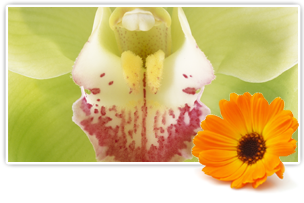
Mokara Orchids: Star Shaped Beauty

Your colorful selection this month arrives from the far reaches of Singapore. The enchanting Mokara Orchid is a trigeneric hybrid between the Ascocentrum, Vanda and Arachnis Orchids. Created in Singapore in 1969, Mokara is now as popular as its parents. The first Mokara hybrid was called Mokara Wai Liang, named after C.Y. Mok of Singapore. This hearty hybrid has a unique flower shape and the potential to last up to two weeks with proper care.

National Garden Home to 400 Species

Captivating orchids have long been ambassadors of Singapore. These charismatic yet elegant flowers produce blooms that never cease to amaze. Vibrant orchid leis are often presented to welcome foreign delegates. Since orchids have become such a large part of the Singapore culture, you can see them all over, be it in hotels or homes. During the last ten years orchids have become extremey popular in our culture as well.

Singapore is home to an extensive selection of orchids as well as a vast array of nurturing and hybridizing orchids. The orchid hybridizing program (the creation of new varieties) started in Singapore as early as 1928!

You can visit the Singapore Botanic Gardens, which is home to their National Orchid Garden. Three hectares of carefully landscaped slopes provide a setting for 60,000 orchid plants comprising 400 species and more than 2,000 hybrids. As Singapore orchids gain fame, it has become obvious that they should be used as agents to promote relations between Singapore and other countries. Now many unique orchids are named after state visitors and dignitaries from within and outside Singapore. Who knows, soon one day you may be viewing the Arnold Schwarzenegger Orchid.

100,000 Distinct Species

We can trace orchids back to the Early Greeks who regarded these delicately constructed blossoms as an icon representing both beauty and love, but scientists think they were here ahead of the dinosaurs. Before man started to hybridize orchids, over 25,000 species had been identified worldwide. If you include all the new hybrids, there are nearly 100,000 varieties of orchids.

Orchids tend to be thought of as fragile and very similar, but no plant family is more diverse. Actually, the orchid family is the largest plant family we know about, and they can be grown in almost all possible environments! They grow wild on every continent except Antarctica. No surprise there - does anything grow there besides algae?

This family is amazingly diverse, from the tiny Mystacidium caffrum to the 20-foot-tall Renanthera storei. Some species produce blossoms no larger than a mosquito, while other blossoms are as large as a 12" dinner plate. They are so intriguing - no wonder people grow them for a hobby, and many a botanist has mysteriously disappeared while trying to collect them.

Bizarre Mating Games

While there are species of orchids that are self-pollinated, the rest are pollinated by bees, wasps, moths, flies butterflies, gnats, ants, and birds. These animals are attracted in different ways, often to a specific species of orchid. For instance, particular bees are attracted to a variety of orchids because of their scent. By collecting scented droplets, they pollinate the flowers. Some blossoms are brightly colored to attract butterflies, while others are dull, but fragrant only at night in order to catch the attention of moths. Many species, like other flowers, are brightly colored and produce sweet nectar to invite birds.

Here are some games that will make you think twice about the distinction between plants and animals. Would you believe that because some orchids resemble female insects by appearance and scent, the male insects attempt to mate with, or steal away, the ' female insect look alike orchid!' Other insects think certain orchid species are the enemy and go right into attack mode. Of course when they fly away coated with pollen, they deposit it onto the stigmas of other flowers.

Another example: certain orchids have sensitive labellums, which close as soon as they are touched. The trapped insects must squeeze through a slim tunnel between the flower column and tip of its labellum to escape, consequently covering its body with pollen. And let's hope they didn't just finish a big dinner.

Susan Orlean Asks, "Are Orchids Smarter than the Bugs?"

Noted author of The Orchid Thief: A True Story of Beauty and Obsession, Susan notes many reasons why some orchids certainly appear to have outsmarted insects. She has a cryptic, picturesque, writing style, and we think reading her work will entice many of our subscribers to take up a new pastime - namely growing orchids. We highly recommend her work. Here are some excerpts from her book.

"As the insects lick the nectar they are slowly lured into a narrowed tube inside the orchid until their heads are directly beneath the crest of the flower's rostellum (an extension of the stigma, the part of a flower on which pollen germinates). When the insects raise their heads the crest shoots out little darts of pollen that are instantly and firmly cemented to the insects' eyeballs, but then fall off the moment the insects put their heads inside another orchid plant."

How the insects get to another orchid plant is beyond us. This image is so vivid; it hurts to read the words!

"Some orchids have straight-ahead good looks but have deceptive and seductive odors. There are orchids that smell like rotting meat, which insects happen to like."

Tips for Orchid success!

Contrary to popular belief, orchids are relatively easy to grow. In fact, they're not easy to kill! Temperature is the most critical factor in blooming. In summer orchid plants will tolerate temperatures up to about 85° F (30° C) and in winter they are happiest with a night temperature of 5O° F (10° C).

Orchids that are native to the foothills of the Himalayas are accustomed to cool conditions. Their tall spikes have from 10-25 flowers ranging from 2 1/2" to 6, which last from one to three months when planted. Many are fragrant and their long leaves make them very distinctive and sophisticated indoor plants. Orchids grow at fairly high altitudes in many areas of the worldChina, India, Thailand, Burma, Taiwan, and parts of Australia. You need to emulate their natural habitat if you are to grow orchids successfully at home.

WHERE
Usually orchids are best kept outdoors from May to September, but bring them in before the danger of frost. Shelter them from hot sun and from the rain as well, since you need to control the watering. During the winter, a cool room is the best spot for your orchids. If the room is too warm, the flower buds may drop off and you will have to wait another year to see the effort of your labor!

WATER
The plants require quite a lot of water in summer, roughly about a pint a week and in exceptionally hot weather even two pints twice a week (providing the plants are planted in open bark which will drain immediately). In winter they need much less - about a half a pint every week to 10 days. The large amount of water is necessary in the summer to maintain very large pseudo bulbs and to help with new growth.

HUMIDITY
All orchids need humidity so put your pots on a stand or tray so they won't have wet feet, and then put the stand and pot in a larger container with pebbles and water. In the hot summer weather it's a good idea to mist your plants every day, but not in the winter.

FEEDING
Orchids are quite hungry and need to be fed all the year round. They should be fed every week to ten days. On the fourth week hold the food and give them plain water to avoid any build up of undesirable chemicals around the roots. The plants seem to thrive on foliar feeding, and if you are using this method both sides of all leaves need to be sprayed. Any suitable half strength feed will do, or special orchid food from nurseries and garden centers.

Your orchids will benefit more by giving them a higher nitrogen feed early in spring to help with the growth of new pseudo bulbs. By giving a food such as Tomarite or Phostrogen from late June or beginning of July, you will help to ensure that flower spikes are formed. These usually peep through sometime in August or September. Standard orchids can become very large and take up lots of room. If you have tight quarters, miniature orchids are now available, and both kinds of plants can be divided to provide new plants.

POTTING
Potting is usually done in the spring after blooming, normally every two years or when the potting medium decomposes. Shake all the old potting mix off the roots, dividing the plant if desired. Divisions of green bulbs with leaves must have 3 to 4 bulbs minimum to bloom.

Pick a potting mix that will hold moisture well a medium-grade fir bark with peat moss and perlite is a common mix. Select a pot that will allow for at least 2 to 3 years of pseudobulb growth before crowding the pot. Place the active growing bulb(s) of the division farthest from the side of the pot. Spread the roots over a cone of the mix in the bottom of the pot, and fill the pot with medium, working it among the roots, tamping firmly. The junction of roots and pseudo bulbs should be about ½" to 1" below the top of the mix.

Bulbs without leaves are called back bulbs, and need special care to grow. Back bulbs may be left on the division to add strength, or removed to propagate. Take single back bulbs, and bury halfway in a bark or peat/sand mix. Keep your bulbs warm and in the shade with roots that are more dry than wet, and give them lots of humidity. When new growth sprouts, pot as above. It may take up to three years to produce a blooming-size plant from this method.

The Dependable Salal

Whether you call it Lemon Leaf or Salal, so much in the Pacific Northwest depends on this leafy plant, yet few people ever notice its prevalence. This evergreen with spoon shaped leaves, flowers in late May or early June, and produces berries in autumn. Native peoples have feasted upon its berries for centuries, deer and elk continue to thrive on its leaves, and today, families can purchase houses and cars from wages earned gathering the foliage for florists.

Lemon Leaf loves moist forests throughout the northern coast mountain rangesfrom southern California to northern British Columbia. It grows well in acidic soil, such as redwood forests, and once it takes hold, it sets roots deeply into the soil. As you can see, the leaves are alternate, evergreen, and the leaf margins are minutely serrated or saw toothed. Historically, the leaves were eaten raw to suppress hunger, heartburn, or diarrhea. The flowers are tiny candy pink urn-shaped flowers that hang along reddish or salmon-colored racemes. They turn paler, almost white as they age. The fruit is a dark purple berry, and I'm told it tastes somewhat like a blue berry. Salal berry jam and wines are also quite popular.

Salal (Gaultheria shallon) is a member of the Ericaceae family, along with the familiar heathers. It's related to wintergreen (Gaultheria procumbens) and creeping snowberry (Gaultheria hispidula). Salal grows as shrubs, 2-3 feet height in full sun, but 5-10 feet in shade. Recently this plant has become a staple of florist shops across North America because its leathery, glossy dark green leaves go so well with long stemmed roses or other florist bouquets.

c&h internationals logo since 1994
Since 1994
Home
Join our Club
Gift Memberships
Renewals
More Information
Featured Arrangement
Past Newsletters
Testimonials
Other Gift Ideas
Corporate Gifts
Wedding Gifts
Arrangement Tips
Flower Club FAQ
Flower Care
Resources
Print a Gift Card
Send a Virtual Bouquet
Refer a Friend
Send a Hint
E-Promos
Contact Us
Link to Us

1 - 800 - 625 - 8238
(Outside US call: 949-206-1904)
P.O. Box 1627, Lake Forest, CA 92609